
Blog
Undocumented Workers’ Comp Rights in New Mexico Explained

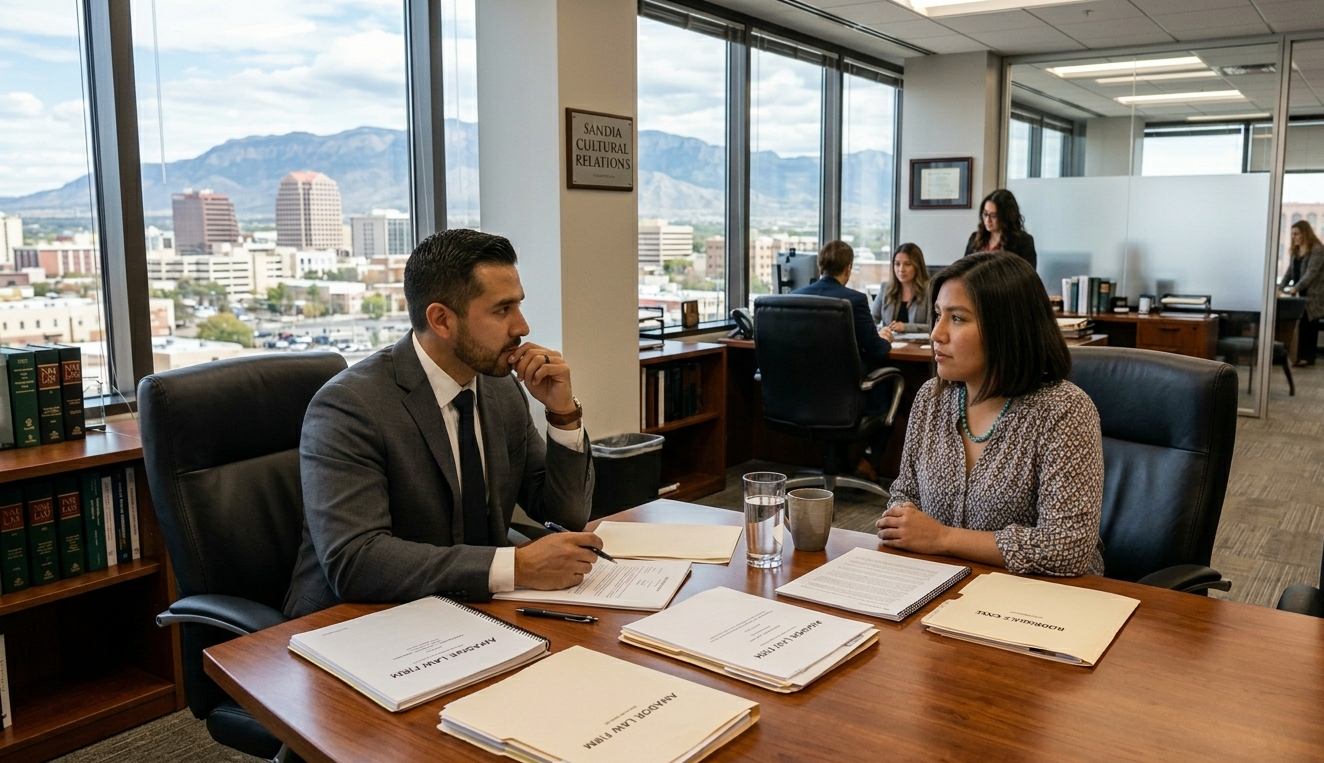
Getting hurt on the job is traumatic enough. But for undocumented workers in New Mexico, the fear of what comes next can feel paralyzing. Many worry that filing a workers’ comp claim will expose them to immigration consequences. Others are told by employers that their status disqualifies them from benefits.
That is not the truth. New Mexico law protects injured workers regardless of immigration status, and you need to know your rights.
Workers’ Compensation for Undocumented Workers in New Mexico:
New Mexico’s Workers’ Compensation Act covers workers broadly. The law defines an “employee” in a way that does not exclude undocumented workers. Courts in New Mexico have consistently upheld the right of undocumented employees to receive workers’ compensation benefits after a workplace injury.
Immigration status is not a defense that employers can use to deny a valid workers’ comp claim. If you were hurt while doing your job, you are generally entitled to medical treatment and wage replacement benefits, just like any other worker.
This protection exists for an important reason. Workers’ compensation coverage is tied to the employment relationship, not to legal status. The moment an employer puts you to work, they take on a legal obligation to provide a safe environment and cover you under their insurance.
If you are unsure about your rights, speaking with a workers’ compensation attorney in Albuquerque is the safest and most effective first step.
What Benefits Can Undocumented Injured Workers Receive in Albuquerque?
Undocumented workers who are injured on the job in New Mexico can receive most of the same core benefits available to any covered employee. This includes payment of all reasonable medical treatment related to the injury, temporary total disability benefits if you cannot work during recovery, and partial disability benefits if your ability to work is permanently reduced.
You can receive treatment from an authorized healthcare provider, get prescription medications covered, and pursue physical therapy or specialist care. The employer or insurer is required to pay for medically necessary treatment.
The question of wage replacement benefits for undocumented workers has some complexity. Courts have addressed situations where a worker could not legally return to work in the same capacity, but the general direction of New Mexico case law supports providing meaningful benefits.
A dedicated workers’ comp legal team can explain exactly what you qualify for based on your specific situation and injury.
Can an Undocumented Worker File Workers’ Comp Without Immigration Risk?
This is the fear that stops many workers from coming forward, and it deserves a direct answer. Workers’ compensation proceedings in New Mexico are not immigration enforcement actions. The state’s workers’ comp system is a civil legal process. Employers, insurance companies, and their attorneys are not immigration authorities, and filing a claim does not trigger a referral to immigration agencies.
Employers who threaten workers with deportation or report them to immigration authorities as retaliation for filing a claim may be engaging in illegal retaliation. New Mexico law prohibits retaliation against workers who assert their rights under the Workers’ Compensation Act.
Retaliation by an employer, whether through termination, threats, or reduction of hours, can expose them to serious legal liability. If your employer is pressuring you not to file or is threatening your status, that conduct itself may be actionable. Read more about how employer retaliation after a workers’ comp claim is handled under New Mexico law.
Injured at Work as an Undocumented Worker in Albuquerque:
The steps you take immediately after a workplace injury matter. They protect your health, preserve your legal rights, and create the documentation needed to support your claim.
Report the injury to your employer as soon as possible. New Mexico has strict deadlines for reporting workplace injuries. Waiting too long can jeopardize your claim even if your injury is serious and undeniably work-related.
Seek medical attention right away. If your employer directs you to a specific provider, follow those instructions and attend all appointments. Medical records are the foundation of any workers’ comp claim. Keep copies of everything.
Do not let anyone discourage you from reporting by mentioning your immigration status. Your employer’s insurance company may try to use that angle to minimize or deny your claim. That is exactly why having legal representation from the start is so important.
The Amador Law Firm legal team is bilingual and works with Spanish-speaking clients throughout Albuquerque and New Mexico. Attorney Rafael Amador grew up with a dual language background and is fully equipped to communicate with clients in Spanish, making it easier to navigate a difficult and confusing process.
What If Your Employer Says You Are Not Covered Because of Your Status?
Some employers, especially in industries that rely heavily on undocumented labor, will tell workers they are not covered. This is often a deliberate attempt to avoid paying out a claim. It is not a legal position that holds up in court.
If your employer denies your claim based on immigration status or refuses to file one on your behalf, contact an attorney immediately. An attorney can file the claim on your behalf and represent you through the entire process, including any disputes with the insurance carrier.
There are also situations where an employer misclassifies workers as independent contractors to avoid providing workers’ comp coverage. If you were treated as an employee in practice, doing regular work for the same employer over time and under their supervision, you may have been improperly classified. This is a violation that an attorney can challenge.
The personal injury practice may also be relevant if your injury involved a third party, such as equipment manufactured by a separate company or a negligent party on a job site who is not your direct employer.
You Were Hurt. You Have Rights. Act Now.
Being undocumented does not mean being without rights. New Mexico’s workers’ compensation system was designed to protect workers, and that protection extends to you. The most important thing you can do right now is stop waiting and start acting.
Amador Law Firm offers free consultations in English and Spanish and works on a no-fee-until-recovery basis. You will not pay anything out of pocket to get legal help. Contact the firm today and find out exactly where you stand.
Frequently Asked Questions
Can undocumented immigrants file for workers’ compensation in New Mexico?
Yes. New Mexico’s Workers’ Compensation Act covers employees regardless of immigration status. You have the right to file a claim if you were injured while working.
Will filing a workers’ comp claim get me deported?
Workers’ compensation proceedings are civil legal processes and are not immigration enforcement actions. Filing a claim does not automatically notify immigration authorities. An attorney can give you more detailed guidance about your specific situation.
What if my employer refuses to file a workers’ comp claim for me?
You have the right to file directly or through an attorney. An employer refusing to file does not eliminate your right to benefits. Contact a workers’ compensation attorney immediately if this happens.
How long do I have to report a workplace injury in New Mexico?
You generally have fifteen days to report an injury to your employer, and one year from the date of injury to file a formal workers’ comp claim. Reporting as soon as possible protects your rights and strengthens your case.
Can I be fired for filing a workers’ comp claim?
Firing or retaliating against an employee for filing a workers’ comp claim is illegal in New Mexico. If this happens to you, you may have a separate retaliation claim against your employer.
Does it matter what industry I work in?
Most employees in New Mexico are covered under the Workers’ Compensation Act, including those in construction, agriculture, hospitality, and domestic work. Coverage requirements can vary, so speaking with an attorney is the best way to confirm your eligibility.
