
Blog
Challenging Breathalyzer Test Results in New Mexico | Scientific Accuracy and Defense Strategy

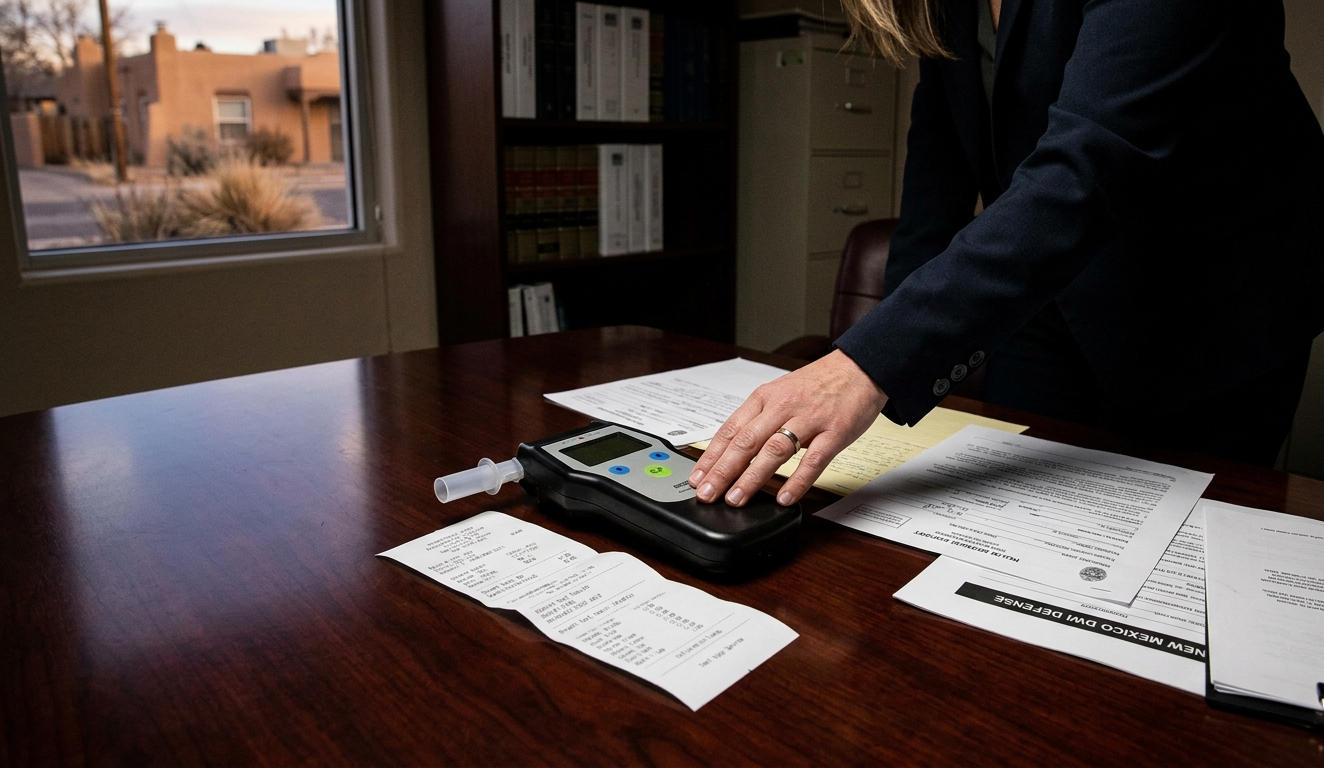
Breathalyzer results often play a central role in DWI arrests, but they are not always as reliable as they appear. Challenging breathalyzer test results in New Mexico cases require a careful look at science, procedure, and police conduct. Small errors in testing can lead to inflated BAC readings and serious legal consequences.
Amadoresq represents individuals facing DWI charges where breath test accuracy is in question. These cases often depend on technical details such as calibration records, observation procedures, and device reliability rather than just the numbers shown on the machine.
Understanding how these tests work and where they fail is critical for building a strong defense strategy.
Challenging Breathalyzer Test Results in New Mexico
Breath testing devices estimate alcohol concentration based on breath samples, but they do not measure blood alcohol directly. This creates room for scientific and procedural error. In many cases, the accuracy of the result depends on how the test was administered and whether the device was properly maintained.
New Mexico courts often review whether officers followed required procedures before and during testing. Issues like improper handling or skipped observation periods can significantly affect the reliability of the results.
A detailed review of New Mexico drunk driving defense lawyer strategies often includes examining whether the breathalyzer device was correctly calibrated and whether maintenance logs support accurate operation.
Breathalyzer calibration errors regarding defense cases frequently involve missing inspection records or outdated device checks. When maintenance is not properly documented, the reliability of the reading becomes questionable.
Even small procedural mistakes can have a major impact. Officers must follow strict testing protocols to ensure the sample is valid. If the process is interrupted or incorrectly performed, the result may not reflect true impairment.
The scientific accuracy of breathalyzer tests is also influenced by external conditions. Temperature, radio frequency interference, and mouth alcohol contamination can all affect readings. These variables are often overlooked during arrest procedures.
New Mexico DWI breath test defense strategies focus heavily on identifying inconsistencies in testing procedures. Defense attorneys review video evidence, police reports, and device records to determine whether the result can be trusted.
In some cases, drivers are encouraged to understand the process early through resources like steps to take after a DWI arrest in New Mexico, since early decisions can impact both license and court outcomes.
Scientific Accuracy of Breathalyzer Tests and Legal Weak Points
Breathalyzer devices operate using a chemical and mathematical estimation process. They assume a fixed relationship between breath alcohol and blood alcohol, but that assumption does not apply equally to every individual.
This is where scientific defense for DWI charges becomes important. Variations in body chemistry, breathing patterns, and medical conditions can distort results. Even something as simple as acid reflux may introduce alcohol from the stomach into the breath sample.
Challenging BAC results in New Mexico often involves expert analysis of how the machine calculated the reading. If the device misinterpreted the sample, the result may not be scientifically valid.
Another common issue is improper observation before testing. Officers must observe the driver for a required period before collecting a breath sample. If this step is skipped, the reading may be contaminated by residual mouth alcohol.
A breathalyzer observation period violation can significantly weaken the prosecution’s case. Courts often require strict compliance with this rule to ensure fairness and reliability.
Defense attorneys also examine whether officers followed proper training procedures. If the person administering the test was not properly certified, the results may be challenged in court.
Legal defense strategies often include comparing test results with other evidence, such as field behavior, driving patterns, and officer observations. This helps determine whether the BAC reading matches the actual condition of the driver.
For example, reviewing DWI field sobriety tests can reveal inconsistencies between physical performance and reported BAC levels.
New Mexico DWI Breath Test Defense Strategy
A strong New Mexico DWI breath test defense focuses on both science and procedure. Breath testing machines require regular calibration, maintenance, and inspection to remain accurate. If any of these steps are missed, the reliability of the result becomes questionable.
Faulty DUI breath testing defense strategies often begin with maintenance records. If the device was not properly serviced, the accuracy of the reading can be challenged in court.
Another important factor is whether the officer followed standardized testing protocols. Even minor deviations from required procedures may affect the validity of the result.
DWI lawyers in Albuquerque handling cases often request detailed records of device history, officer certification, and testing logs to identify potential errors.
New Mexico’s implied consent breath test rules also play a role in many cases. Drivers are expected to submit to chemical testing after a lawful arrest, but officers must still follow legal procedures when requesting the test.
If proper advisement was not given, or if the arrest itself was not lawful, the resulting evidence may be challenged.
Challenging DUI chemical test evidence often involves questioning whether the device was functioning properly at the exact time of testing. Machines can drift out of calibration or produce inconsistent results if not properly maintained.
Scientific defense for DWI charges may include testimony from experts who explain how environmental conditions, machine errors, and biological factors affect results.
Breathalyzer Device Maintenance Failures and Case Impact
Breath testing devices are not maintenance-free instruments. They require ongoing inspection, calibration checks, and software verification. Any failure in this process can directly impact the accuracy of the result.
Breathalyzer device maintenance failures are one of the most common issues raised in DWI defense cases. Missing service records or outdated calibration logs may suggest the device was unreliable.
Courts often rely on documentation to determine whether the device was functioning properly. If records are incomplete, the prosecution may struggle to prove accuracy beyond a reasonable doubt.
Defense attorneys working on Albuquerque DWI defense cases frequently subpoena maintenance logs and testing history to verify compliance with state standards.
In some cases, software or hardware issues may also affect results. Sensor contamination or internal errors can produce readings that do not reflect actual alcohol levels.
Questioning breathalyzer reliability often involves showing that multiple potential error sources exist. When combined, these issues can create reasonable doubt about the validity of the evidence.
Legal Strategy for Challenging BAC Results
Challenging BAC results in New Mexico requires a structured legal approach. Attorneys must analyze both scientific data and police conduct to identify weaknesses in the case.
One key strategy involves reviewing the timeline of the arrest. If there was a delay between driving and testing, alcohol absorption may have increased the BAC level after the stop.
This timing issue is critical because prosecutors must prove impairment at the time of driving, not just at the time of testing.
Another strategy involves comparing breath test results with physical evidence. If the reported BAC level does not match the driver’s behavior, coordination, or speech, the result may be questioned.
Defense teams also examine whether proper testing procedures were followed during the stop. Any deviation from protocol can weaken the prosecution’s argument.
A detailed review of DWI DUI laws in Albuquerque helps identify whether officers complied with legal requirements during the arrest process.
In many cases, attorneys also explore whether constitutional rights were violated during the stop or arrest. Illegal stops or improper detentions can impact the admissibility of breath test evidence.
Common Weak Points in Breath Test Cases
Several recurring issues appear in breathalyzer-related DWI cases. These include:
- Improper calibration or missing maintenance records
- Failure to observe the driver before testing
- Medical conditions affecting breath samples
- Incorrect administration of the test
- Environmental interference during testing
- Delay between driving and testing
Each of these factors can contribute to inaccurate results or unreliable evidence.
Defense attorneys often combine multiple arguments to create reasonable doubt. Even if one issue alone is not enough, a combination of errors can significantly weaken the prosecution’s case.
Conclusion
Breathalyzer evidence may seem straightforward, but it is often more complex than it appears. Challenging breathalyzer test results in New Mexico cases require careful analysis of science, procedure, and legal compliance.
Calibration errors, observation violations, rising BAC issues, and maintenance failures can all affect the reliability of a test. When these factors are properly examined, they can play a major role in the outcome of a DWI case.
Amadoresq focuses on identifying weaknesses in breath test evidence and building defense strategies based on scientific accuracy and legal standards. Early legal action is important to protect rights, challenge evidence, and prepare a strong defense.
FAQ
Can breathalyzer results be challenged in New Mexico?
Yes. Breath test results can be challenged based on calibration errors, improper procedures, medical conditions, or device failures.
What is a breathalyzer observation period violation?
It occurs when officers fail to properly observe the driver before testing, which may allow contamination of the breath sample.
How accurate are breathalyzer devices?
They provide estimates, not exact measurements. Accuracy depends on proper calibration, maintenance, and correct use.
What is rising BAC defense?
It argues that alcohol levels increased after driving, meaning the test may not reflect impairment at the time of driving.
Can medical conditions affect BAC results?
Yes. Conditions like acid reflux or diabetes may interfere with breath testing accuracy.
Should I hire a lawyer for a DWI breath test case?
Yes. A lawyer can review scientific evidence, identify errors, and challenge unreliable BAC results effectively.
