
Blog
Motorcycle Accident Claims in New Mexico: What Riders Need to Know

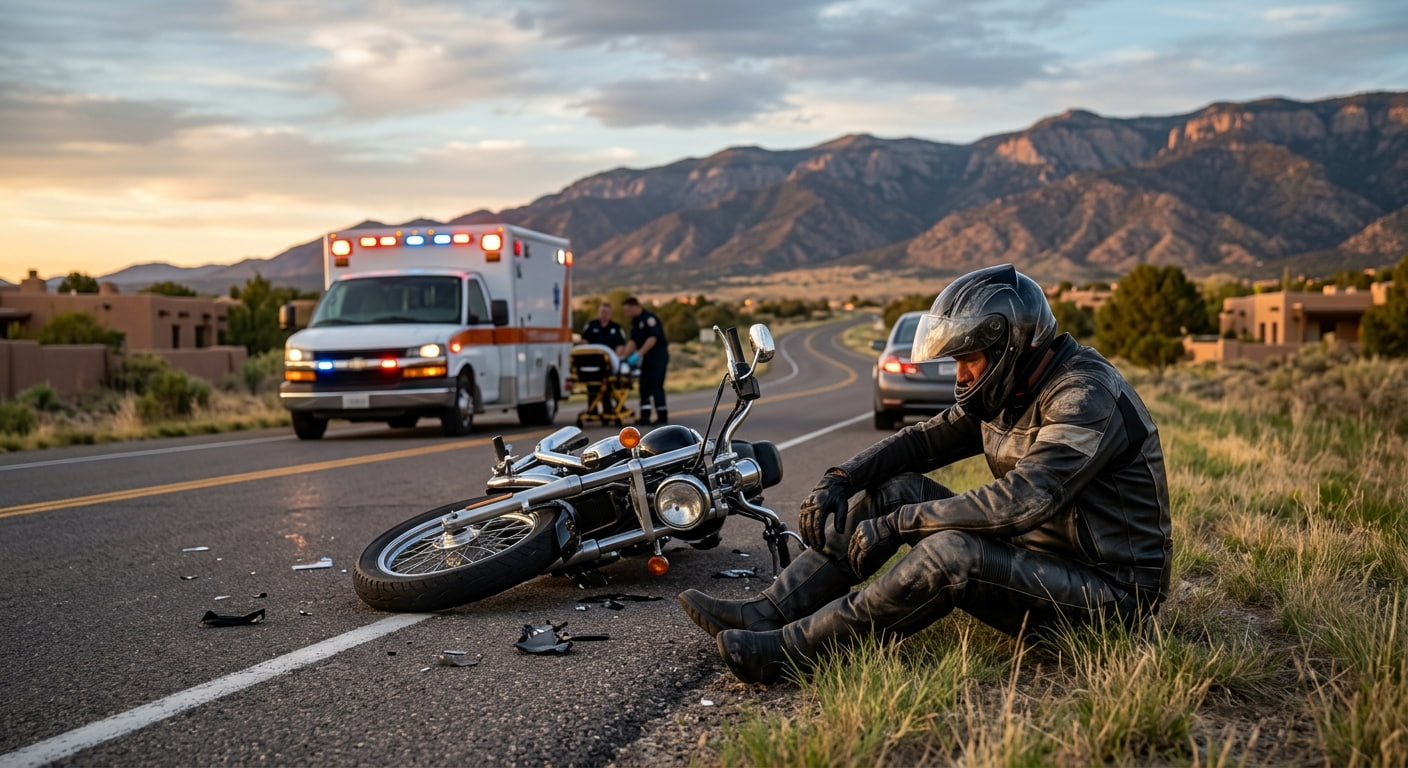
Riding a motorcycle through Albuquerque’s open roads and mountain routes is one of the best parts of living in New Mexico, but it comes with real risk. Motorcyclists are far more exposed than drivers in passenger vehicles, and even a minor collision can cause serious injuries like road rash, broken bones, or traumatic brain injury. When a crash isn’t your fault, understanding how to pursue a claim matters just as much as the medical care you receive afterward.
Our attorneys at Amador Esq. have represented riders across the state who were hit by distracted drivers, cut off in turning lanes, or struck by vehicles that simply didn’t see them. This guide covers what New Mexico law says about motorcycle accidents, the unique challenges riders face with insurance companies, and the steps to protect your claim from the moment a crash happens.
Motorcycle Accident Claims in New Mexico: The Basics
Motorcycle accident claims in New Mexico generally follow the same negligence framework as other vehicle collisions. To recover compensation, you need to show another driver failed to exercise reasonable care and that failure caused your crash. Common examples include a driver making a left turn without checking for oncoming motorcycles, a car merging into a rider’s lane, or someone following too closely and rear-ending a bike stopped at a light.
New Mexico is an at-fault insurance state, meaning the driver responsible for causing the crash is financially liable for the resulting damages. Riders can file a claim directly with the at-fault driver’s insurance company, though many of these claims eventually require legal help once the insurer starts disputing fault or downplaying injuries.
Unlike some states, New Mexico does not require riders to wear a helmet if they are eighteen or older, though anyone under eighteen must wear one by law. This distinction matters in a claim because insurance companies sometimes try to argue that a lack of helmet use contributed to the severity of injuries, even in crashes where the helmet had nothing to do with how the collision itself occurred.
Determining fault often comes down to which driver violated a traffic law or failed to yield the right of way. Police reports, dashcam footage from nearby vehicles, and traffic camera recordings can all play a role in establishing exactly what happened in the seconds before impact. Because motorcycles are smaller and move differently than cars, some drivers genuinely misjudge a rider’s speed or distance, which is one of the leading causes of intersection collisions across the state.
Road Hazards Unique to New Mexico Riders
Riders across New Mexico deal with a mix of road conditions that create their own accident risks. Sudden monsoon downpours during summer months can turn dry pavement slick within minutes, catching both drivers and riders off guard. Loose gravel on rural highways and mountain passes is another frequent factor in single-vehicle motorcycle crashes, particularly on curved roads outside city limits.
Wide open highways connecting Albuquerque to smaller towns also see higher average speeds, which increases the severity of any collision that does occur. Wildlife crossing rural roads at dusk adds yet another layer of risk that riders have to watch for, especially during fall and early winter when animal movement increases.
Even within city limits, potholes and poorly maintained roads pose a specific danger to motorcyclists that a passenger vehicle driver might not even notice. Hitting a deep pothole at speed can cause a rider to lose control instantly, sometimes without any other vehicle involved at all. When a hazard like this leads to a crash, the City of Albuquerque or the responsible municipality may bear some liability, though these claims involve shorter notice deadlines than standard injury cases.
Why Motorcycle Claims Face More Scrutiny
Insurance adjusters frequently apply an unfair bias against motorcyclists, assuming riders were speeding or driving recklessly simply because they were on two wheels. This bias can show up in lowball settlement offers or outright claim denials, even when police reports and witness statements clearly point to the other driver’s negligence.
Because of this pattern, insurance company injury claim tactics aimed at riders tend to be more aggressive than those used in standard car accident claims. Adjusters may request a recorded statement early, hoping a rider says something that can be twisted into an admission of shared fault. Politely declining a recorded statement until you’ve spoken with an attorney is almost always the safer choice.
Common Injuries and Long-Term Impact
Motorcycle crashes tend to produce more severe injuries than typical fender-benders because riders lack the protection of a vehicle frame, airbags, and seatbelts. Road rash, fractures, spinal cord damage, and traumatic brain injuries are all common outcomes, even in crashes that happen at relatively low speeds.
A concussion after a car crash in NM can be difficult to diagnose immediately, and the same holds true for motorcycle collisions. Symptoms like confusion, headaches, or memory issues sometimes don’t appear until hours or days later, which is one reason a full medical evaluation right after any crash is so important, even if you feel mostly fine at the scene.
Building a Strong Motorcycle Accident Case
Evidence collection after a motorcycle crash looks similar to a car accident case, but a few details carry extra weight. Photographs of skid marks, the angle and position of both vehicles, and any road debris can help reconstruct exactly how the collision happened. Because riders are more vulnerable, the physical evidence at the scene often tells a clearer story about speed and impact than it would in a typical two-car crash.
Getting the police report is essential, along with the contact information of any witnesses who saw the crash unfold. If your motorcycle sustained visible damage, photographing it before repairs begin preserves evidence that can later support your claim. Keep in mind that repair shops sometimes discard damaged parts quickly, so requesting they hold onto anything relevant is worth the extra step.
Medical documentation should begin immediately and continue consistently throughout treatment. Gaps in care are one of the easiest things for an insurance company to point to when arguing that your injuries were less serious than claimed, or that something other than the crash caused your ongoing pain.
New Mexico Insurance Minimums and Why They Matter
New Mexico requires drivers to carry liability insurance of at least $25,000 per person and $50,000 per accident for bodily injury, along with $10,000 for property damage. These minimums often fall far short of covering the real cost of a motorcycle accident, especially when injuries involve surgery, extended physical therapy, or long-term rehabilitation.
This gap is exactly why uninsured and underinsured motorist coverage matters so much for riders. If the at-fault driver’s policy limits are exhausted before your medical bills and lost wages are fully covered, your own underinsured motorist coverage can step in to help close that gap. Many riders don’t realize this coverage exists on their own policy until well after a crash, which is another reason reviewing your insurance documents before an accident happens, not after, is worth the time.
Some riders also carry medical payments coverage, sometimes called MedPay, which can pay for initial treatment regardless of who caused the crash. This coverage can be especially valuable in the days immediately following a wreck, before liability has been fully sorted out between insurance companies.
The Role of Police Reports and Accident Reconstruction
A responding officer’s report often becomes one of the most influential pieces of evidence in a motorcycle claim. It typically includes statements from both drivers, witness contact information, and the officer’s initial assessment of fault based on the scene. While this report is not the final word on liability, insurance companies weigh it heavily during settlement negotiations.
In crashes involving serious injuries or disputed fault, an accident reconstruction expert can add another layer of proof. These specialists analyze skid marks, vehicle damage patterns, and roadway conditions to recreate exactly how a collision unfolded, often countering a driver’s claim that the motorcycle “came out of nowhere” or was traveling at an unsafe speed.
Dealing With Comparative Fault
New Mexico’s pure comparative negligence rule applies to motorcycle accidents just as it does to other injury claims. Even if you are found partially at fault, perhaps for lane splitting or a minor traffic violation at the time of the crash, you can still recover damages reduced by your percentage of responsibility.
Lane splitting, or riding between lanes of stopped or slow-moving traffic, is illegal in New Mexico. If an insurance company can show you were lane splitting at the time of a crash, they will likely use it to argue for a higher percentage of fault on your part, even in situations where the other driver’s negligence was the primary cause of the collision.
What Compensation Can Cover
A successful motorcycle accident claim can include compensation for medical expenses, lost income during recovery, repair or replacement of the motorcycle and gear, and pain and suffering tied to the physical and emotional impact of the crash. Serious injuries that lead to permanent limitations may also support claims for reduced future earning capacity.
Because motorcycle injuries tend to be more severe, medical costs often run significantly higher than in a typical car accident. Understanding who pays medical bills after a car accident in Albuquerque applies to motorcycle riders as well, particularly when it comes to coordinating between health insurance, medical payment coverage, and the at-fault driver’s liability policy.
Common Mistakes That Hurt Motorcycle Claims
Riders sometimes make the same mistakes as other accident victims, but the stakes tend to be higher given the severity of typical injuries. Avoiding common mistakes to avoid after a car accident in Albuquerque is just as relevant for motorcyclists, especially when it comes to posting about the crash on social media or accepting a quick settlement before the full extent of injuries is known.
Another frequent misstep involves delaying treatment because a rider assumes their injuries will heal on their own. Beyond the health risk, this delay gives insurance companies an opening to argue that the crash didn’t cause significant harm. Reviewing general mistakes to avoid after a car accident can help riders sidestep the pitfalls that most often reduce claim value.
Riders Who Don’t Speak English as a First Language
New Mexico’s rider community includes many Spanish speakers who may feel unsure about navigating an insurance claim or legal process in a second language. Working with a firm that offers services from Spanish speaking car accident law firms ensures nothing gets lost in translation during a time when clear communication with your legal team matters most.
When a Motorcycle Crash Turns Fatal
Some motorcycle collisions result in catastrophic outcomes that families never expect to face. In these devastating situations, understanding wrongful death claims in New Mexico becomes essential for surviving spouses, children, or parents seeking accountability and financial support after losing a loved one.
Riding a motorcycle shouldn’t mean accepting unfair treatment after a crash that wasn’t your fault. Insurance companies count on riders not knowing their rights or feeling too overwhelmed to push back against a lowball offer. Talking with an attorney soon after a crash, even before you’ve fully recovered, can help preserve evidence and put you in a stronger position for negotiations down the road. Our team at Amador Esq. understands the unique challenges riders face and is ready to help you pursue the full compensation your case deserves.
Frequently Asked Questions
Do I have to wear a helmet to file a motorcycle accident claim in New Mexico?
No. Riders eighteen and older are not legally required to wear a helmet in New Mexico, and not wearing one does not prevent you from filing a claim, though insurers may try to use it against you.
How long do I have to file a motorcycle accident lawsuit in New Mexico?
Most motorcycle accident claims fall under the state’s three-year statute of limitations for personal injury, starting from the date of the crash.
What if the other driver claims they didn’t see my motorcycle?
This is a common excuse, but it does not eliminate liability. Drivers are legally required to watch for motorcycles just as they would any other vehicle on the road.
Can I still recover damages if I was lane splitting during the crash?
Lane splitting is illegal in New Mexico and could increase your assigned percentage of fault, but you may still recover reduced damages under the state’s comparative negligence rule.
Is it worth hiring a lawyer for a motorcycle accident claim?
Given the severity of typical injuries and the bias many insurers hold against riders, working with an experienced attorney often results in significantly higher settlements than handling a claim alone.
What if the at-fault driver doesn’t have enough insurance to cover my injuries?
Your own uninsured or underinsured motorist coverage may help cover the difference, which is one reason reviewing your policy limits before you ever need them is a smart precaution for any rider.
Should I talk to my insurance company before speaking with a lawyer?
It’s fine to report the crash to your own insurer, but it’s best to avoid giving a detailed recorded statement to the at-fault driver’s insurance company until you’ve discussed your case with an attorney.
