
Blog
10 Things to Know if Stopped by Police in New Mexico

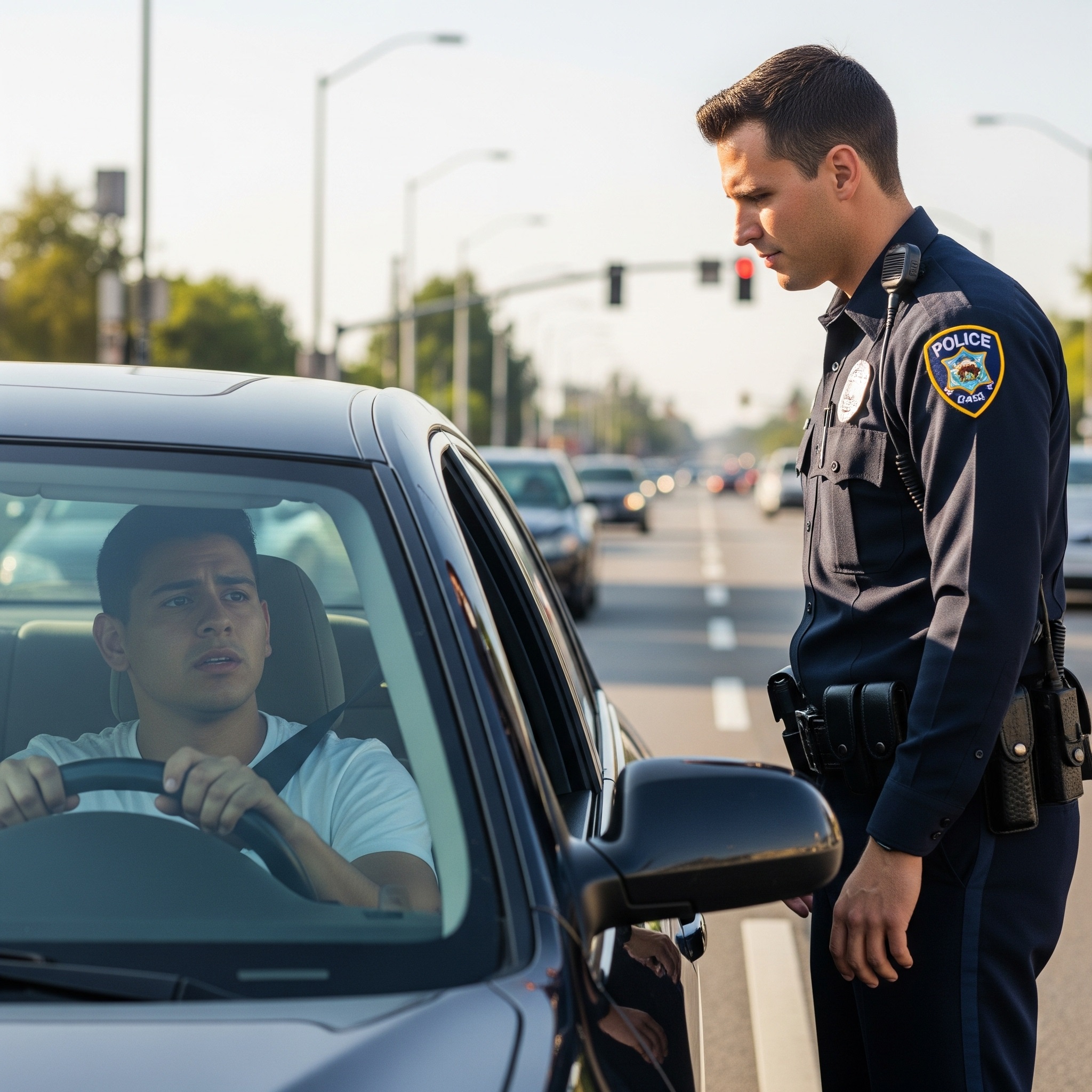
Getting stopped by police in New Mexico can be stressful, sometimes even intimidating. What you do in those first moments can affect your safety, your rights, and the outcome of any potential criminal charges. Knowing how to respond is one of the strongest protections you have under state law.
Here are 10 essential rules to protect your rights if you are stopped by law enforcement in New Mexico, whether it is a routine traffic stop, a suspected DWI encounter, or a street interrogation.
1. Is New Mexico a Stop and ID State? Know the Law.
The most common question people ask is whether you are legally required to show identification to an officer. Yes, New Mexico is a stop and identify state.
Under NMSA § 30-22-3, concealing your true name or identity with the intent to obstruct an officer’s lawful duties is a petty misdemeanor. However, the police cannot demand your ID without cause. For this law to apply, an officer must already possess reasonable suspicion that you have committed, are committing, or are about to commit a crime.
Your exact identification requirements depend entirely on your role during the encounter:
| Your Role | Identification Obligation in New Mexico |
| The Driver | You must physically hand over your driver’s license, vehicle registration, and proof of insurance upon request. Simply holding it against a closed window is not sufficient compliance. |
| A Passenger | You generally do not have to provide identification unless the officer develops independent reasonable suspicion of a crime involving you specifically. |
| A Pedestrian | If lawfully detained under reasonable suspicion, you must verbally provide your true name, but you are not required to carry or produce physical photo documentation. |
2. Stay Calm and Keep Your Hands Visible
Remain calm, polite, and avoid sudden movements. If you are driving, pull over safely, turn off the engine, and keep your hands clearly visible on top of the steering wheel.
Your behavior is routinely captured on dashcam and bodycam footage, which will be documented in the officer’s official report. Staying composed prevents unnecessary escalation and protects your credibility if the case goes to court.
3. You Have the Right to Remain Silent
While you must comply with New Mexico’s stop and identify laws by stating your name or providing your driver’s license, your Fifth Amendment right to remain silent protects you from deeper interrogation. You do not have to answer questions about where you are going, where you are coming from, or what you have been doing. You can invoke this right directly by saying:
“I wish to remain silent and I want to speak to an attorney.”
4. You Do Not Have to Consent to a Search
If an officer asks to search your vehicle, pockets, or personal belongings, you have the legal right to refuse. Officers may try to phrase the request casually, but you should use clear, unambiguous wording:
“I do not consent to a search.”
This protects your constitutional rights under the Fourth Amendment. Even if the officer proceeds with a search anyway, stating your refusal out loud ensures your defense attorney can challenge any illegally seized evidence in court later.
5. You Can Legally Record the Encounter
Are you allowed to record police when pulled over? Yes, you are. New Mexico law firmly protects your right to record video or audio of law enforcement officers performing their duties in public spaces, provided you do not physically interfere with their operations.
Keep your phone visible, inform the officer you are recording for your safety, and avoid making rapid movements toward your pockets to retrieve a device. This recording can serve as vital evidence if a dispute arises over how the stop was conducted.
6. Field Sobriety Tests Are Completely Voluntary
If an officer suspects a DWI, they will likely ask you to exit the vehicle and perform roadside physical evaluations, such as the walk-and-turn, the one-leg stand, or the horizontal gaze nystagmus (eye test).
These tests are 100% optional in New Mexico. You can decline them respectfully. Because these tests are highly subjective and designed for failure, declining them denies the prosecution extra evidence to use against you.
7. Understand New Mexico’s Blood Alcohol Limits
If you choose to drive after drinking, it is critical to know the legal thresholds for criminal charges under state law:
- 0.08% BAC or higher for standard adult drivers.
- 0.04% BAC or higher for commercial driver’s license (CDL) holders.
- Any measurable alcohol for drivers under the age of 21.
Exceeding these limits, or showing clear signs of impairment, will result in an immediate arrest for DWI.
8. Refusing a Post-Arrest Breath Test Carries Strict Penalties
While roadside field sobriety tests are voluntary, New Mexico’s Implied Consent Act dictates that if you are lawfully arrested for a DWI, you must submit to a chemical breath or blood test administered at the police station.
Refusing this chemical test triggers an automatic, administrative driver’s license suspension. You have a narrow timeline to challenge this administrative suspension, making it critical to act quickly.
9. Take Notes Immediately Following the Stop
As soon as you are safely away from the encounter, document every detail you can recall while the memory is fresh. Write down or dictate notes covering:
- The exact time, date, and specific location of the stop.
- The names, badge numbers, and agency of the officers involved.
- The precise statements made by both you and the officer.
- The presence of any witnesses or nearby surveillance cameras.
These specific details allow a defense lawyer to identify inconsistencies in the police report or pinpoint potential civil rights violations.
10. Contact an Experienced Criminal Defense Lawyer Right Away
If your encounter resulted in a citation, an arrest, or an unfair charge for concealing identity, delay works against you. Speaking with legal counsel early shields you from procedural mistakes and allows your legal team to secure critical dashcam or bodycam data before it is overwritten.
Secure Your Legal Defense
A police stop can jeopardize your driving privileges, your clean record, and your personal freedom. If you face charges following an interaction with law enforcement, get an advocate who understands the nuances of New Mexico’s traffic and concealment statutes.
Contact Amador Law Firm in Albuquerque to schedule a confidential review of your case. Defend your rights and protect your future. Contact us today for guidance or visit our Albuquerque office for support.
